Definition: Sleeping heart rate is how often your heart beats per minute while you are asleep, rather than a single fixed number for the whole night.
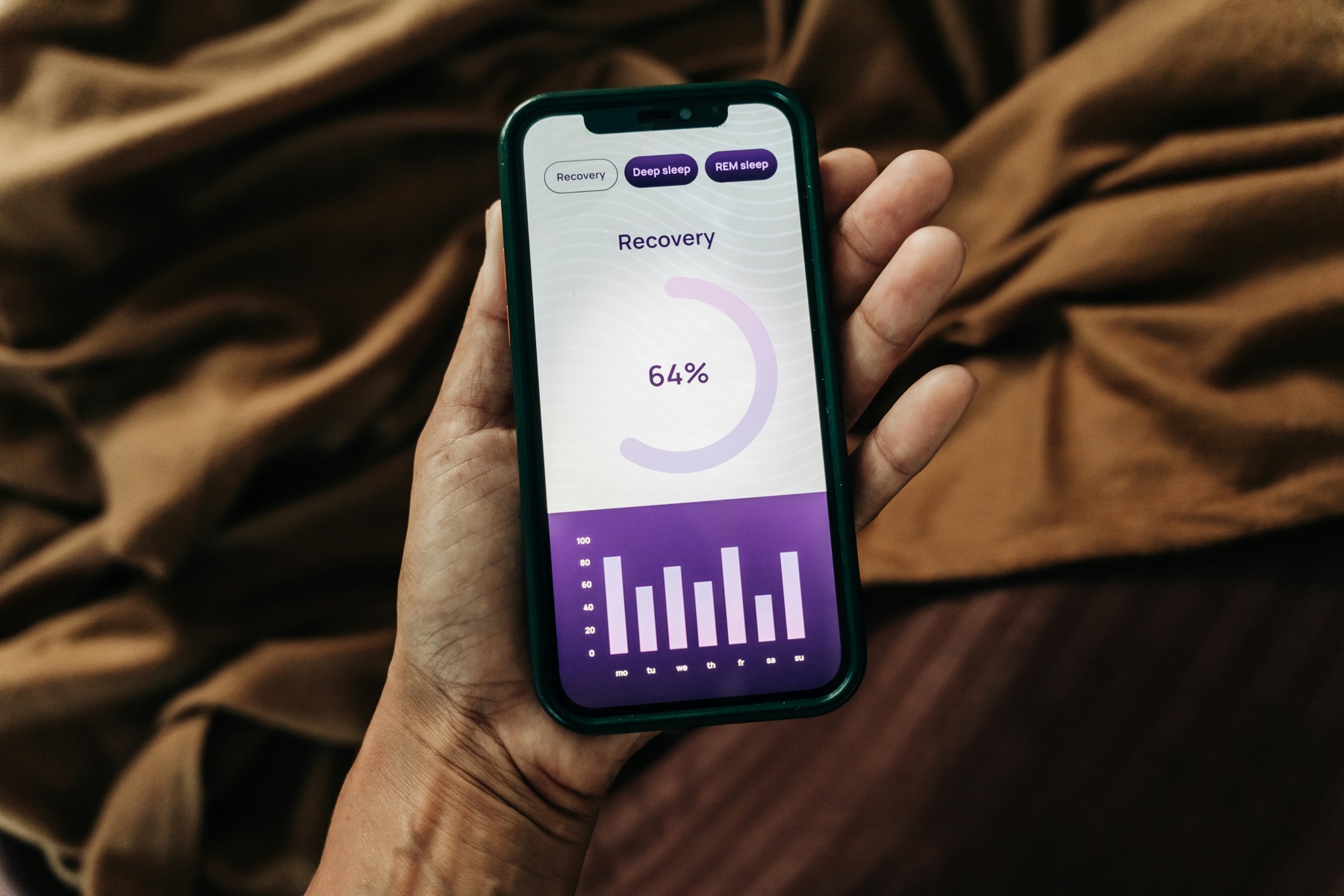
You open your sleep app and notice a peak in the graph. Perhaps you remember waking with a pounding chest; perhaps you slept through it. Either way, it is easy to mistake one point on a chart for an explanation of your night.
This article helps you separate ordinary variation, measurement uncertainty, and changes worth discussing with a clinician. The goal is to understand your sleeping heart rate, not to chase the lowest possible reading. We will look at sleep stages, the different numbers an app reports, and what to do when a fast heartbeat wakes you.
How Sleeping Heart Rate Changes Through the Night
How it works
Your heart keeps adjusting while you sleep. The autonomic nervous system, which manages functions without conscious effort, changes its activity across sleep and wakefulness. Its sympathetic branch supports alertness; its parasympathetic branch helps slow the heart.
According to the National Heart, Lung, and Blood Institute, heart rate and blood pressure fall during non-REM sleep. During REM sleep, they can rise toward waking levels. These are broad patterns, not a rule that every moment of a stage must follow.
A brief awakening can also change the trace. A higher point alone does not tell you whether you were dreaming, moving, awake, or experiencing a heart rhythm problem. That distinction matters when interpreting sleeping heart rate without a clinical recording.
The analogy: an average journey speed
Imagine comparing two journeys by their average speed. Both averages might match even though one journey was steady and the other included stops and short bursts of movement. The summary hides the sequence.
A nightly average has the same limitation. It can help compare nights, but it cannot describe every moment or explain a particular peak. Looking at the time of an event and your symptoms adds context that the average leaves out.
Did you know?
Sleep stages are identified using brain activity and other measurements in a sleep study, not pulse alone. The NHLBI's sleep-stage overview also explains that deeper non-REM sleep is more common earlier in the night, while REM periods generally become more prominent later. Your nighttime graph need not remain flat to be compatible with sleep.
Reading Your Sleeping Heart Rate Without Mixing Up Metrics
Before comparing numbers, check what the app actually measured. The minimum, average, and awake resting pulse answer different questions. Comparing yesterday's minimum with today's average can create an apparent change that never happened.
| Measurement | What it describes | What it cannot establish alone |
|---|---|---|
| Nightly average | A summary across the device's estimated sleep period | The cause of a brief episode |
| Nightly minimum | The lowest recorded or processed value | Whether the whole night was restful |
| A short peak | An increase at a particular time | Whether it was a rhythm problem |
| Awake resting pulse | Heart rate while awake and resting | Your expected pulse throughout sleep |
The American Heart Association describes 60 to 100 beats per minute as the usual adult resting range when calm and feeling well. That is an awake resting reference, not a required sleeping heart rate range. Sleep, fitness, and some medicines can produce lower readings.
There is no single number in this article that can classify every reader's night as safe or unsafe. A value that is familiar for one person may be unusual for another. Symptoms and a meaningful change from your usual pattern deserve attention even when a number looks ordinary on a general chart.
- Identify the metric. Average, minimum, peak, or awake resting pulse?
- Add context. Timing, symptoms, and changes from your usual pattern.
- Choose the next step. Seek care for warning symptoms; do not let a graph delay help.
Why You Might Notice a Faster Heartbeat at Night
Sometimes a sensation brings you awake; sometimes you only discover a recorded peak the next morning. Those are different observations. Waking up with fast heart rate is not a diagnosis, and a sleep graph cannot identify the cause by itself.
Mayo Clinic's overview of palpitations describes sensations such as pounding, fluttering, or skipped beats. Possible contributors include stress, strenuous exercise, caffeine or nicotine, fever, certain medicines, and hormonal changes. An abnormal rhythm is another possibility, so recurring symptoms should not automatically be attributed to anxiety.
Breathing symptoms add important context. Loud snoring, witnessed breathing pauses, gasping, and daytime sleepiness are reasons to discuss sleep apnea with a clinician. The NHLBI lists these among its symptoms. A heart-rate rise neither confirms nor rules out that condition.
If you notice a change after starting a medicine, record its name and timing for your clinician or pharmacist. Do not stop prescribed medication or adjust a dose based on a wearable graph.
Three Everyday Examples: Same Graph, Different Questions
These are hypothetical situations, not patient stories or product results. They show how to ask better questions without deciding the cause from a screenshot.
1. A peak with no remembered awakening
You feel well but find one brief peak in the morning. Note whether the device recorded movement or a gap nearby, and check that it was worn as directed. An isolated value is worth putting in context, not automatically labeling as either dangerous or harmless.
2. A pounding chest that wakes you
You wake aware of your heartbeat. Record roughly when it began, how long it lasted, and whether there were other symptoms. The immediate question is how you feel, not whether the app awarded a good sleep score. Use the safety guidance below rather than waiting to collect more nights.
3. A different weekly pattern
Your sleeping heart rate averages have changed across several nights. Check whether you are comparing the same metric on the same device. Bring a short record of the change, symptoms, illness, and medication changes to a clinician if it persists or concerns you. A trend is information to discuss, not proof of a particular cause.
What a Wearable Can and Cannot Tell You
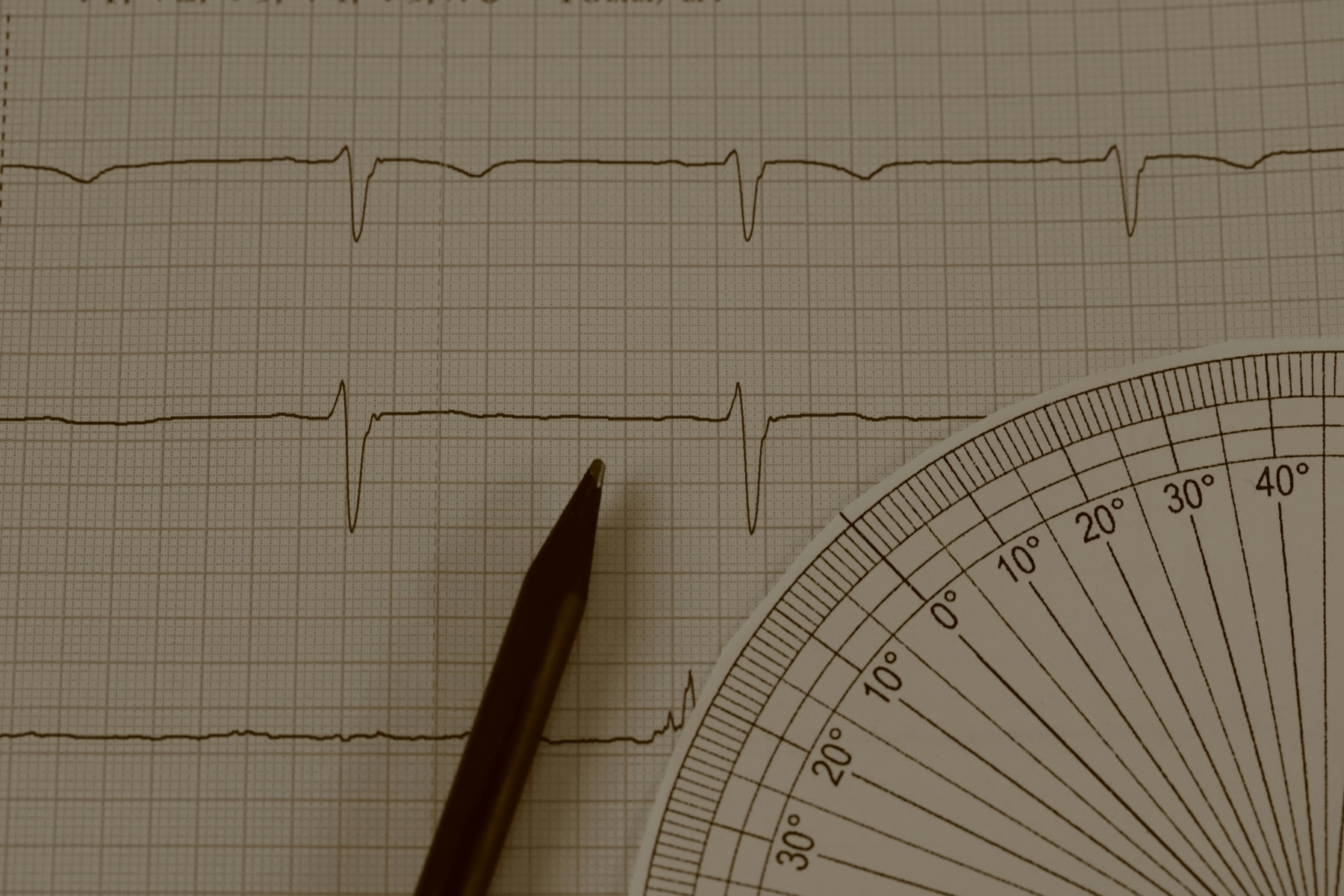
Many wrist devices estimate pulse using optical signals from changes in blood volume near the skin. This is different from recording the heart's electrical activity with an electrocardiogram, or ECG. A heart-rate graph is not automatically an ECG, even when the device offers a separate ECG feature.
The American College of Cardiology's wearable-device review notes that movement, fit, and other factors affect optical signals. Wear the device according to its instructions and avoid treating every brief jump as a precise measurement. Equally, do not dismiss symptoms because the graph looks reassuring.
For a useful record of sleeping heart rate, keep the process simple:
- Compare the same summary metric rather than switching between minimum and average.
- Note symptoms and the approximate time of any episode.
- Add relevant context, such as illness or a medication change.
- Save a readable screenshot for a clinical discussion if needed.
Record what you observed separately from what you suspect. "Woke at 3 a.m. with a pounding chest" is more useful than "stress caused a spike." You can describe a pattern without claiming to know its cause.
When to Seek Help
Call 911 in the United States if palpitations occur with chest pain, fainting, severe shortness of breath, or severe dizziness. Do not spend time checking an app before seeking help. Mayo Clinic identifies these as reasons for emergency attention.
Arrange a clinical review for episodes that recur, become more frequent, or worsen, especially with an existing heart condition. Also raise a pulse that is persistently different from your usual pattern. An observation period is not a reason to delay care when you feel unwell.
Supporting Sleep Without Chasing a Heart-Rate Target
For everyday sleep support, the NHLBI recommends consistent sleep times, a quiet wind-down, and a cool, dark bedroom. It also advises avoiding nicotine, caffeine, and alcohol near bedtime. These are sleep habits, not a way to manage unexplained palpitations yourself. Our article on sleep regularity explores the timing side in more detail.
raizz fits when the challenge is disrupted sleep and understanding the habits around it, not diagnosing a fast heartbeat. The raizz Band uses heart-rate-related signals as part of its sleep-support system and responds to signs of emerging restlessness with gentle closed-loop vibration. The app's Sleep Journal and longer-term views help connect sleep patterns with what you log. Its guidance is grounded in established behavioral sleep science. For someone focused on sleeping heart rate, that means looking beyond an isolated number toward sleep continuity and daily routines. It does not establish why palpitations occurred or replace medical evaluation.
Takeaway: Read the Pattern, Act on Symptoms
Sleeping heart rate is useful context, but it is not a diagnosis or a score to minimize. Know which metric you are reading, keep observations separate from explanations, and give symptoms priority over the graph. For your next review, note one clear question you want answered instead of collecting more numbers without a purpose.
raizz
Your Tomorrow Starts Tonight.
Explore how raizz connects nighttime sleep support with everyday habits.


