Definition: Sleep latency is the amount of time it takes you to move from being fully awake in bed to actually falling asleep.
If you have ever stared at the ceiling while your pillow seemed to grow louder, you have already wondered, what is sleep latency, and why does it change from night to night? You are not alone. Many people think sleep begins when they close their eyes, but the body sees it as a gradual handoff from alertness to rest.
This guide explains what is sleep latency in plain language, then goes deeper into what affects it, how it differs from rem latency, and what your pattern may be telling you. You will also learn how to read the number without obsessing over it, because sleep data is useful only when it leads to calmer choices.
What Is Sleep Latency in Plain English?
When someone asks what is sleep latency, the simplest answer is: it is your “fall-asleep time.” If you get into bed at 10:30 p.m. and drift off at 10:50 p.m., your sleep latency is about 20 minutes. It is not the same as time in bed, and it is not the same as total sleep time.
A short delay can be normal. Your brain needs time to dim its lights, your heart rate often settles, and your thoughts may take a few laps before they slow down. Asking what is sleep latency becomes useful when the number is often very short, often very long, or changing in a way that affects how you feel the next day.
Think of it like an airplane taxiing before takeoff. Closing your eyes is boarding the plane. Falling asleep is lift-off. Sleep latency is the runway time between the two.
| Sleep latency pattern | What it may suggest | Practical next step |
|---|---|---|
| 0 to 5 minutes | You may be very sleepy or carrying sleep debt | Review sleep duration and daytime fatigue |
| 10 to 20 minutes | Often a typical settling window | Keep routine steady |
| 20 to 30 minutes | May reflect stress, timing, caffeine, or light exposure | Adjust evening cues and wind-down habits |
| 30+ minutes often | Your body may not be ready for sleep at bedtime | Track patterns and consider professional guidance if it affects daily life |
What Is Sleep Latency, and How Does It Work?
Your body does not flip from “awake” to “asleep” like a switch. It fades through a sequence. Light levels, body temperature, stress hormones, hunger, movement, and mental stimulation all vote on whether the brain should stay alert or let go.

- Wakefulness: Your brain is still monitoring tasks, thoughts, sounds, and sensations.
- Drowsiness: Your attention loosens, muscles relax, and thoughts become less organized.
- Sleep onset: The brain crosses the threshold into the first sleep stage.
- Stabilization: If the environment and body feel safe, sleep continues instead of bouncing back into wakefulness.
This is why sleep latency can vary even when bedtime stays the same. A calm evening, a regular schedule, and low light may shorten the runway. Late caffeine, bright screens, heavy worry, or an irregular wake time can lengthen it.
For a public health overview of sleep basics, the CDC sleep hub is a useful starting point. For a broader plain-language sleep resource, MedlinePlus on healthy sleep is also reliable.
The Analogy: A Dimmer Switch, Not a Light Switch
Imagine your brain as a busy restaurant at closing time. The kitchen slows first, then the last tables leave, the lights dim, and staff lock the door. You cannot close the restaurant smoothly if new customers keep walking in.
Those “new customers” might be work messages, a dramatic show, alcohol close to bed, heavy meals, or the mental replay of tomorrow’s to-do list. The goal is not to force sleep. The goal is to stop sending wake-up signals when you want your system to power down.
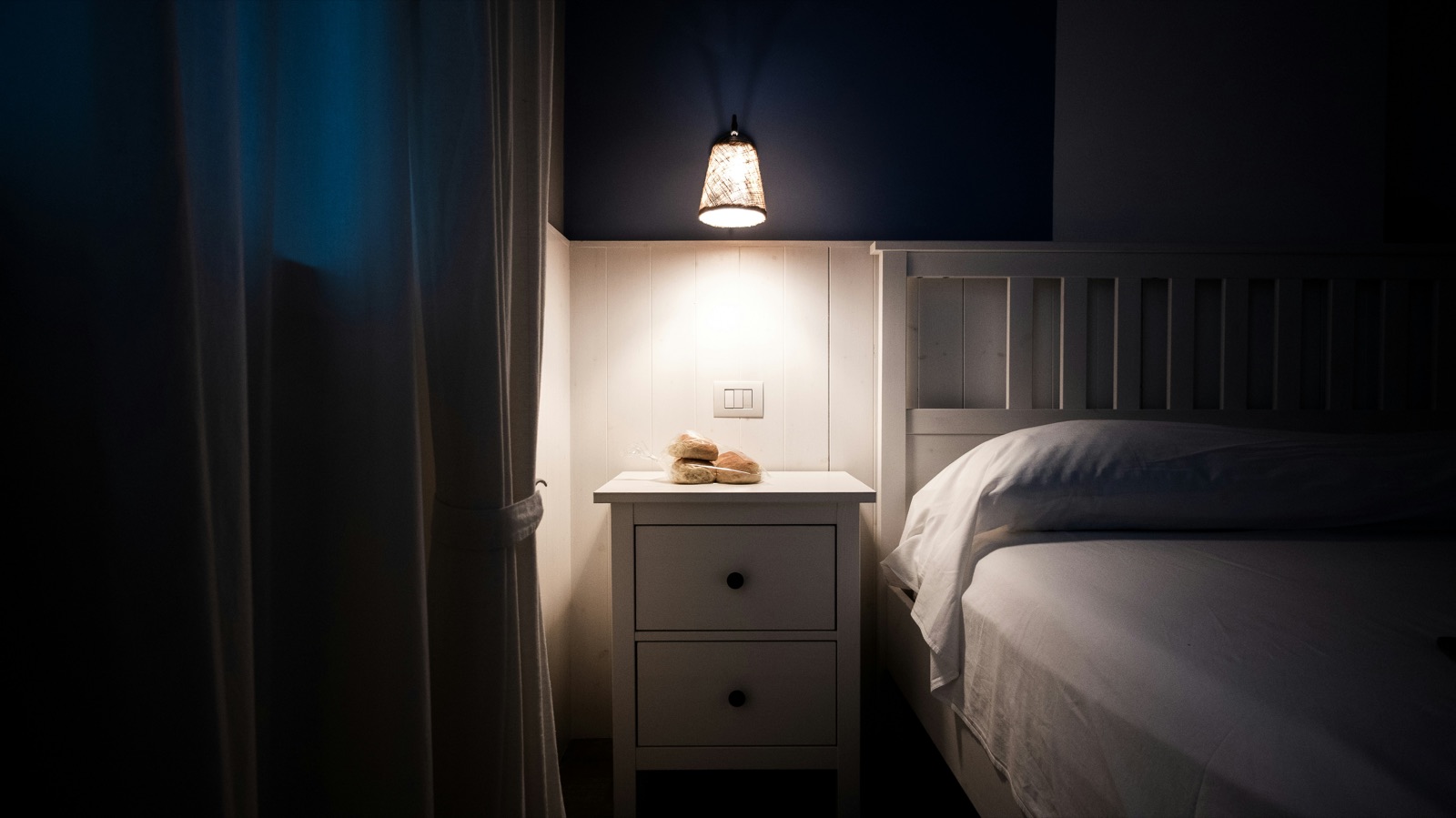
Key components that shape sleep latency
Sleep latency is influenced by several overlapping systems. Beginners can think of these as levers. Experts often think of them as interacting signals across circadian timing, homeostatic sleep pressure, and arousal regulation.
1. Sleep pressure
Sleep pressure is your body’s need for sleep after being awake. It builds during the day, much like hunger builds between meals. If you nap late or spend too long in bed, that pressure may be weaker at night.
Helpful cues include:
- A consistent wake time
- Morning light exposure
- Physical activity earlier in the day
- Avoiding long late naps
- Getting out of bed if you are wide awake for a long stretch
2. Circadian rhythm
Your circadian rhythm is your internal timing system. It helps decide when you feel alert and when you feel sleepy. Light is one of its strongest signals, especially morning light and bright evening light.
If bedtime changes a lot across the week, your body may not know when to prepare for sleep. That can stretch the fall-asleep window. If this sounds familiar, learning about sleep regularity can help you understand why wake time often matters more than people expect.
3. Arousal level
Arousal means activation, not just emotion. You can be activated by stress, excitement, exercise, noise, temperature, pain, or an intense conversation. Even positive stimulation can keep the brain online.
A helpful question is not “Why can’t I sleep?” but “What signals am I giving my brain in the last 90 minutes?” That shifts the problem from blame to design.
4. Conditioning
Your brain learns associations. If bed becomes the place where you scroll, worry, plan, argue, or watch episodes, it may learn that bed means alertness. If bed usually means quiet, darkness, and letting go, the transition can become easier.
This is why basic sleep hygiene still matters. It is not a magic checklist. It is a way to make the bed and bedroom send a clearer message.
5. Measurement method
Sleep latency can be estimated by memory, a wearable, an app, or a sleep lab. Each method has limits. Memory is subjective, and devices estimate sleep from body signals rather than directly reading consciousness.
The number is still useful when you look at trends. One strange night matters less than a repeated pattern.
What Is Sleep Latency vs REM Latency?
What is sleep latency compared with rem latency? Sleep latency measures how long it takes to fall asleep at the start of the night. rem latency measures how long it takes to enter the first REM period after sleep begins.
REM sleep is the stage often linked with vivid dreaming, emotional processing, and memory-related activity. In many adults, the first REM period usually arrives later in the sleep cycle, not right away. That means sleep latency is about the doorway into sleep, while rem latency is about when one specific sleep stage appears after you are already asleep.
Here is a simple comparison:
| Term | Measures | Starts counting from | Why it matters |
|---|---|---|---|
| Sleep latency | Time to fall asleep | Getting into bed or trying to sleep | Shows how easily your body crosses into sleep |
| rem latency | Time until first REM sleep | Sleep onset | Helps describe sleep architecture |
| Sleep efficiency | Percent of time in bed spent asleep | Whole sleep window | Shows how consolidated the night was |
If you want the next layer, sleep efficiency pairs well with latency. Someone can fall asleep quickly but wake often, or take longer to fall asleep but sleep steadily afterward. The full picture matters.
Real-world examples: what is sleep latency in daily life?
What is sleep latency telling you on an ordinary Tuesday? Often, it is less about one dramatic cause and more about small signals adding up. I tried tracking my own wind-down routine for two weeks and found that my fall-asleep time was less about bedtime itself and more about what happened between dinner and lights out.
Example 1: The “wired but tired” worker
You feel exhausted at 9 p.m., answer emails at 10 p.m., then lie awake at 11 p.m. Your body is tired, but your brain has been told that the day is still open for business.
Try this:
- Set a “last work input” time
- Write tomorrow’s first task on paper
- Keep the final 30 minutes low-stimulation
Example 2: The weekend schedule swing
You wake at 6:30 a.m. on weekdays and 10:00 a.m. on weekends. Sunday night arrives, and sleep feels far away. Your internal clock may be running later than your alarm expects.
Try this:
- Keep wake time within a smaller range
- Get outdoor light soon after waking
- Move bedtime gradually, not suddenly
Example 3: The late caffeine mystery
You stop coffee by 3 p.m., but you still take 45 minutes to fall asleep. Caffeine sensitivity varies. For some people, afternoon caffeine remains loud at bedtime.
Try this:
- Move caffeine earlier for one week
- Watch the trend, not just one night
- Compare both sleep latency and next-day alertness
Example 4: The too-early bedtime trap
You decide to “be good” and get into bed an hour early. Instead of sleeping more, you lie awake longer. The body may not have enough sleep pressure yet.
Try this:
- Keep the wake time steady
- Shift bedtime in small steps
- Use sleepiness, not just the clock, as a cue
Example 5: The data-aware sleeper
You wear a tracker and notice your fall-asleep time jumps after late meals. That does not prove the meal caused it, but it gives you a testable pattern. Try lighter dinners earlier for a week and compare.
Did you know?
People often misjudge how long they were awake before sleep. When the brain is quiet but not fully asleep, time can feel stretched. That is why combining a simple journal with device trends can be more useful than relying on memory alone.
A journal does not need to be complex. Track just four items for seven nights:
- Bedtime
- Estimated fall-asleep time
- Caffeine timing
- Stress level from 1 to 5
You may see a pattern faster than expected.
How to use sleep latency without overthinking it
The number is a signal, not a grade. A single long night does not mean you failed. A single short night does not mean everything is solved. Look for trends across at least one to two weeks.
For most people, the goal is to create conditions that make sleep easier to enter. That usually means aligning the body’s internal clock, building enough sleep pressure, and lowering arousal before bed.
raizz is an AI sleep wearable brand. It does not just track sleep, it actively improves it through real-time closed-loop vibrations. For people who take a long time to fall asleep, wake repeatedly, or already use sleep data but still wake tired, the raizz Band, app, and charging base connect night patterns with gentle, personalized support. Its system detects sleep stages and likely micro-awakenings, then responds with very gentle vibration. The app also uses sleep patterns and journal entries to offer guidance grounded in established behavioral sleep science.
Research shows that weak, heart-rate-matched vibration during sleep may support subjective sleep experience and objective sleep continuity in small studies. One example is Kwon et al. 2024 in Frontiers in Neuroscience, available through this DOI link. The key lesson is not that one number explains sleep, but that timing, physiology, and behavior interact.
Expert Takeaway: What Is Sleep Latency Really Worth Knowing?
What is sleep latency at an expert level? It is a practical window into sleep readiness. It reflects the meeting point between your biology, your schedule, your environment, and your state of mind.
The future of sleep tracking is not just collecting more numbers. It is making those numbers easier to act on. A fall-asleep time can help you spot whether your body needs steadier timing, more wind-down space, better light habits, or less evening activation.
So let the number be a guide, not a judge. Sleep is not a performance. It is a conversation with the body, and latency is one of the first things the body says back.
raizz
Your Tomorrow Starts Tonight.
raizz helps connect your fall-asleep patterns with calmer data-driven nights.


