Sleep Trackers vs. Active Sleep Improvement: Why Tracking Isn't Enough
 6 min read ·

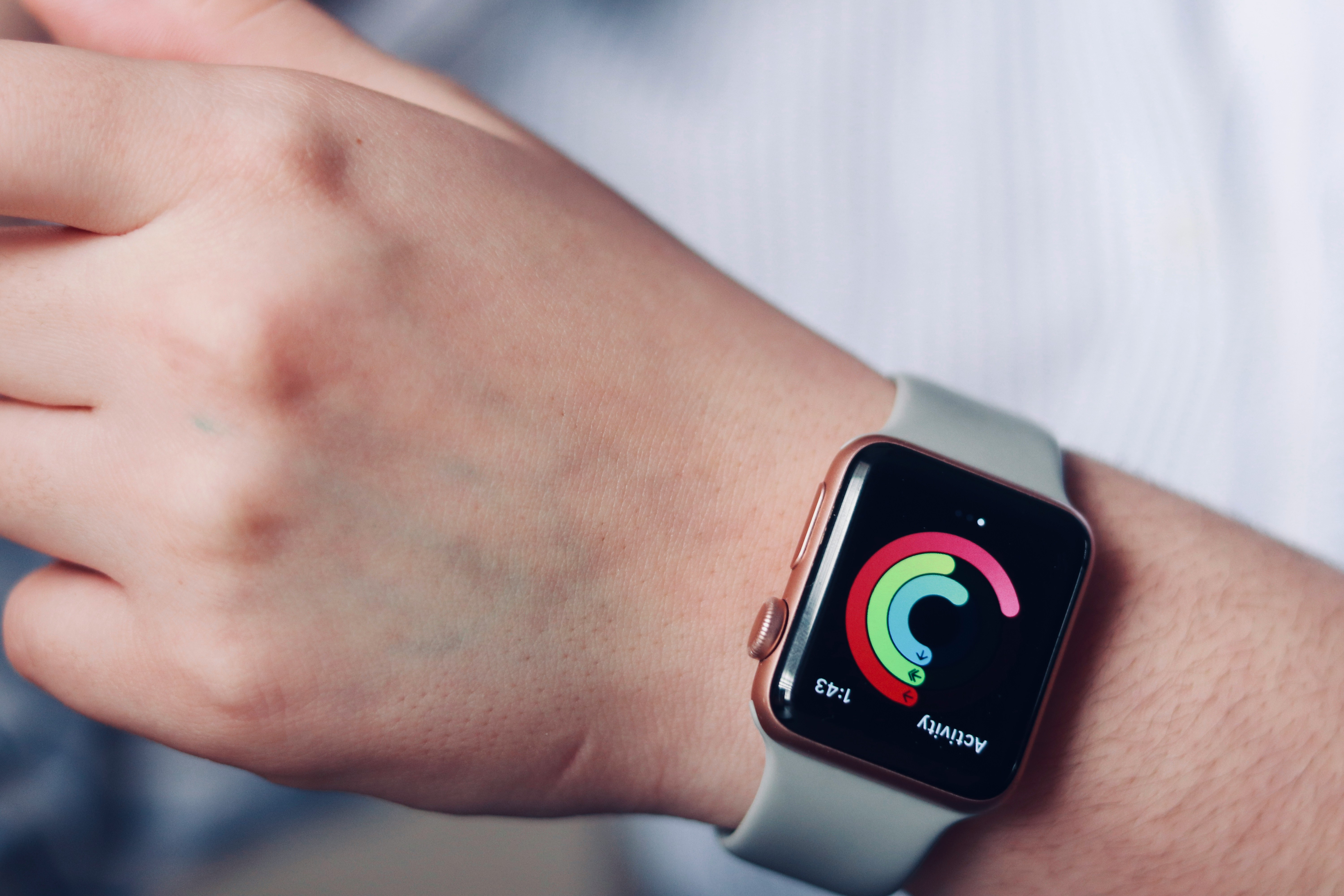
Nearly half of American adults now wear something to watch their sleep. Most of them still feel tired in the morning.
That gap is the whole problem. Watching sleep and improving sleep are not the same thing. One shows you what happened. The other changes what happens next.
Sleep, improved in real time
Get early access to better, more stable sleep.
A 2025 American Academy of Sleep Medicine survey found that 48% of U.S. adults now use a sleep tracking device. That's up from 35% just two years earlier. The sleep tech market is already worth over $28 billion and growing. Everyone is watching their sleep data. Not nearly as many people are sleeping better.
Sleep data is easy to collect now. What's harder is knowing what to do with it. There's a real difference between seeing a low number and understanding why you got it. And a bigger difference between understanding it and actually changing something. That jump from data to action to improvement is where most people get stuck.
1. What does a sleep tracker actually measure?
A sleep tracker measures peripheral signals: movement, heart rate variability, skin temperature, and sometimes blood oxygen. It uses algorithms to produce probabilistic estimates of your sleep stages from those signals, not direct EEG-based measurements. What it doesn't measure are the biological systems that actually drive sleep quality: your circadian rhythm, your sleep pressure, or your arousal level. It gives you a picture of the output. It tells you very little about the inputs that produced it.
Consumer devices estimate deep sleep, REM, and light sleep from indirect physiological signals. The accuracy is improving, but the staging remains an estimate. A 2025 publication from the World Sleep Society recommends anchoring consumer tracker outputs to standardized measures and multi-night trends, not individual nightly readings, precisely because single-night staging can mislead.
The device records what your body did. It doesn't explain why, and it doesn't change anything going forward. To understand how those output signals map to the actual biology of sleep, see our piece on sleep as a biological system.
2. Why doesn't seeing poor sleep data fix your sleep?
Data without action doesn't change outcomes. A nightly readout tells you what happened last night. It doesn't identify which input caused it, and it doesn't adjust anything in response. The biological systems that govern sleep quality, your circadian rhythm, your sleep pressure, and your arousal level, are unchanged by observation. Only deliberate intervention changes them.
This is the core limitation of treating data collection as improvement. You can watch metrics like total sleep time and WASO (wake after sleep onset) sit flat for weeks and have zero progress if nothing else changes. The data only becomes useful when it leads somewhere: a specific behavioral adjustment, an environmental change, or a medical evaluation.
Research underscores this gap. A 2026 randomized controlled trial published in JMIR Research Protocols tests precisely whether personalized machine learning interventions using wearable data can actually translate into measurable sleep improvements, noting that while consumer data collection is now widespread, whether it produces better outcomes remains an open question.
3. When watching sleep data makes sleep worse
For a meaningful fraction of people, sleep tracking creates the very problem it's meant to solve. The same AASM survey found that 76% of U.S. adults have lost sleep worrying about sleep problems. When a device adds a nightly readout to that existing anxiety, the result can be self-defeating.
Researchers have named this pattern orthosomnia: a preoccupation with achieving perfect sleep data that itself disrupts sleep. A 2024 cross-sectional study found that orthosomnia prevalence ranges from 3% to 14% among regular sleep tracker users, with those affected showing consistently higher insomnia scores than non-cases. Among adults aged 18 to 35, roughly 23% reported feeling more stressed about their sleep after they started using a tracker.
The device becomes the source of the pressure that keeps you awake. This isn't a rare edge case. It's a documented pattern in a significant portion of the people now wearing sleep devices every night.
4. What does actively improving sleep actually require?
Active sleep improvement means changing the inputs to your sleep system, not just reading the outputs. Sleep is governed by three interacting systems: your circadian rhythm, your sleep pressure, and your arousal level. No consumer device changes any of these on its own. What changes them is deliberate behavioral intervention: consistent wake times, morning light exposure, caffeine timing, a proper wind-down window, and the right room temperature. A tracker can show you whether those changes are working. The changes have to come from you.
This is why two people with the same nightly readouts can have very different outcomes. One treats the data as information and adjusts a specific behavior. The other keeps watching and changes nothing. Same numbers. Very different trajectories.
The goal is to shift from passive observation to active adjustment. Sleep as a system means there are specific levers you can act on. Knowing which lever matters in your situation is where the data becomes useful, not as something to stress over, but as a signal to interpret and then act on.
5. What adaptive sleep systems do that trackers don't
The category that bridges data collection and real improvement is adaptive sleep technology. These systems don't just record what happened. They respond to it.
A 2025 systematic review published in PMC evaluated adaptive digital interventions triggered by passive sensing for sleep improvement. The research found that interventions which close the loop, using real-time data to deliver personalized behavioral prompts, environmental adjustments, or structured behavioral therapy modules, produced measurably better sleep outcomes than passive monitoring alone.
Separately, 2025 research showed that wearable-based machine learning models can forecast sleep efficiency four to eight hours before sleep onset. That means systems can identify, while you're still awake, that tonight's conditions are likely to produce poor sleep latency or fragmented continuity, and intervene before the outcome is set.
This is the practical difference between passive and adaptive sleep support. Tracking is retrospective. Adaptive systems are prospective. Adaptive sleep support should be considered complementary to established behavioral sleep strategies and clinical evaluation where appropriate, not a replacement for either. For more on how this category is developing, see our piece on the emergence of adaptive sleep systems.
6. How to use sleep data as an input, not a verdict
A sleep tracker is most useful when you treat it as a diagnostic signal rather than a nightly grade. Check weekly trends, not individual nights. Use the data to test whether a specific behavioral change is moving your metrics over time. When the data is doing its job, it points you somewhere: toward a habit to build, an input to adjust, or a pattern worth investigating. When it's just adding pressure, it's not helping.
In practice, look for patterns across days: whether sleep latency shortens when you keep a consistent wake time, whether WASO decreases when you cool your room, whether total sleep time improves after cutting caffeine earlier. These are the sleep health metrics worth paying attention to, and testing one change at a time makes it possible to know what actually moved them.
If your device is producing a number that makes you feel better or worse each morning without pointing you anywhere, it's not functioning as a tool. It's functioning as a stressor. The value of sleep data is entirely in the connection between what you see and what you do next.
The takeaway
Sleep trackers are useful. But they're useful for one thing: showing you what happened. What they don't do is change what happens next. That part requires acting on what you see, adjusting the right inputs, and running the experiment long enough to measure a real result.
The goal isn't a better readout. It's actually sleeping better. And those two things are only the same when you're using the data as a signal to act on, not as the outcome itself.
If you're not sure where to start, think about your sleep as a system with specific inputs you can change. That's the frame that makes the data useful. Start there.
Frequently Asked Questions
It depends on how you use it. Research shows that sleep trackers can increase anxiety for a meaningful minority of users, a pattern researchers call orthosomnia. If checking your data each morning makes you feel more stressed, that stress can worsen the very outcomes you're trying to improve. The fix is usually to stop checking nightly and focus on weekly trends instead. If anxiety persists, taking a full break from the device often helps more than switching to a different one.
A sleep tracker records data from peripheral signals like movement and heart rate, and produces probabilistic estimates of your sleep stages. It shows you what happened. An adaptive sleep system uses that same data to actively change the conditions of your sleep, before sleep begins and in real time during it.
Raizz does this in two stages. Before sleep, smart soothing technology helps your body wind down and transition into sleep, supporting sleep onset around 20% faster. During sleep, it monitors for signs of restlessness and responds with gentle, closed-loop vibration at the right moments, helping your body stay asleep longer and reducing the fragmentation that leaves you tired in the morning.
Tracking is retrospective. Adaptive sleep support changes the conditions before and during sleep.
Consumer trackers can estimate your deep sleep duration, but they can't reliably tell you why it's low. Deep sleep is influenced by several interacting factors: sleep pressure, circadian timing, core body temperature, and arousal level. A tracker shows you the output. Identifying which input is driving a problem requires looking at your behavioral patterns alongside the data. If the disruption is significant and persistent, working with a sleep specialist is the more reliable path.
More Articles You Might Like





Have questions, want to join us, or simply want to connect? We'd love to hear from you. Feel free to reach out at
[email protected]