Beyond Sleep Scores: Understanding Sleep as a System
 7 min read ·

Sleep is not a uniform state. It is a structured, dynamic biological process composed of multiple stages, each contributing to cognitive recovery, metabolic balance, and physiological restoration.
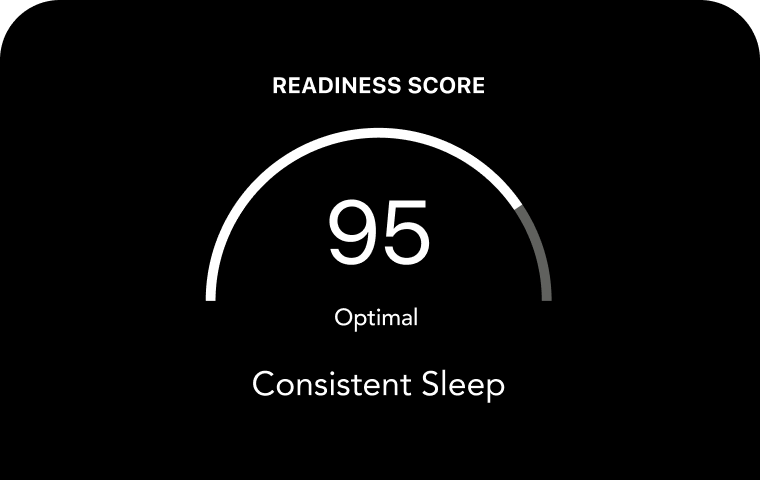
Public discourse often focuses on a single number — a sleep score. In reality, sleep health emerges from the coordinated interaction of duration, continuity, architecture, and circadian timing.

Sleep, improved in real time
Get early access to better, more stable sleep.
1. The Foundations of Sleep Health
In clinical sleep medicine, foundational metrics are often more predictive of health outcomes than stage percentages alone.
Key sleep fundamentals include:
· TIB (Time in Bed)
· TST (Total Sleep Time)
· Sleep Latency
· WASO (Wake After Sleep Onset)
· Sleep Regularity
To understand more about these sleep concepts, please refer to our previous blog :
The Science of Sleep: Core Sleep Health Metrics Guide
These measures reflect whether sleep is:
· Sufficient in duration
· Efficient in onset
· Continuous through the night
· Aligned with circadian rhythm
Chronic reduction in total sleep time is consistently associated with impaired cognition, metabolic dysfunction, and cardiovascular stress. Frequent awakenings (elevated WASO) fragment sleep and reduce restorative efficiency. Irregular timing destabilizes circadian regulation. Before optimizing individual stages, these foundations must be stable as a system.
2. The Architecture and Physiology of Sleep
Human sleep alternates between two primary states:
· NREM (Non-Rapid Eye Movement) sleep
· REM (Rapid Eye Movement) sleep
NREM sleep includes three stages:
· N1 – light transitional sleep
· N2 – stable light sleep
· N3 – deep sleep (slow-wave sleep)
These stages cycle approximately every 90 minutes across the night:
· Early night: higher proportion of N3
· Late night: increased REM dominance
Each stage serves different physiological roles:
· N2 contributes to sensory gating and sleep stability
· N3 is characterized by synchronized slow-wave activity
· REM supports emotional regulation and neural integration
Healthy sleep depends on the balance and continuity of all stages.

3. Sleep is an Interdependent System
The key implication is that sleep health does not depend on any one variable in isolation. It emerges from the interaction between duration, continuity, timing, architecture, physiology, and environment across the night.
A short sleep window reduces the opportunity to complete normal NREM–REM cycling. Prolonged sleep latency compresses total sleep opportunity. Elevated WASO fragments continuity and interrupts the restorative processes that depend on sustained sleep. Irregular timing weakens circadian alignment, making it more difficult for sleep onset, maintenance, and architecture to unfold normally. Therefore, these relationships are interdependent.
A person may spend adequate time in bed but still experience poor sleep if sleep is fragmented. Another may achieve reasonable total sleep time but feel unrefreshed because sleep timing is inconsistent and circadian regulation is unstable. Someone else may focus on increasing deep sleep while overlooking the more fundamental problem of delayed sleep onset or repeated awakenings.
This is why sleep should be understood as a system rather than a score. Sleep quality is not the output of one number. It is the emergent result of multiple processes working in coordination.
4. The Systems that Regulate Sleep
Sleep does not arise spontaneously. It is regulated by multiple biological and behavioral systems operating simultaneously.
· One layer is homeostatic sleep pressure — the accumulating need for sleep that builds during wakefulness. The longer we remain awake, the greater the biological drive for sleep becomes.
· A second layer is circadian timing — the internal biological clock that helps determine when the body is prepared for sleep and wakefulness. Even with sufficient sleep pressure, mistimed circadian signals can delay onset or reduce sleep quality.
· A third layer is physiological arousal — including autonomic activation, breathing stability, body temperature, and stress state. When the body remains physiologically activated, sleep may become lighter, more fragmented, or more difficult to initiate.
· A fourth layer is environment and behavior — light exposure, noise, temperature, daily routine, exercise timing, meals, alcohol, and device use. These factors do not merely influence comfort; they can directly alter the conditions under which sleep begins and stabilizes.
These layers constantly interact. Circadian misalignment can increase sleep latency. Stress can elevate arousal and worsen fragmentation. Environmental disturbance can interrupt continuity and alter architecture. Insufficient sleep opportunity can leave the system without enough time to complete its normal physiological sequence.
Seen this way, sleep is not a passive event. It is a regulated biological process shaped by multiple control systems.
5. What Good Sleep Actually Looks Like
If sleep is a system, then good sleep should also be defined systemically.
Good sleep is not the maximization of one stage, nor the pursuit of one perfect number. It is the presence of enough opportunity, enough continuity, enough regularity, and enough physiological stability for the brain and body to move through sleep in a normal and restorative way.
At a system level, healthy sleep tends to have several characteristics:
· Adequate time available for sleep
· Relatively efficient sleep onset
· Limited fragmentation across the night
· Consistent timing across days
· Intact progression through NREM and REM cycles
· Restoration that is reflected not only in data, but in daytime function
This definition matters because it reframes what improvement means. Improving sleep does not necessarily mean "getting more deep sleep" or "raising a score." It may mean falling asleep more easily, waking less often, sleeping on a more regular schedule, and preserving a more stable progression across the night.
In other words, good sleep is less about optimization of a single output and more about stability of the full system.
6. Conclusion
Sleep is not a single state, a single score, or a single stage. It is a dynamic biological system composed of interacting processes: duration, continuity, timing, architecture, physiology, and environmental regulation. To improve sleep, we must move beyond isolated outputs and begin thinking in system level. Not just how much sleep occurred, but how sleep was initiated, maintained, structured, and regulated across the night.
Sleep is a system. And better sleep begins with understanding the system as a whole.
Frequently Asked Questions
Sleep health emerges from the coordinated interaction of duration, continuity, architecture, and circadian timing. A single score cannot capture whether sleep was efficiently initiated, continuously maintained, properly structured through NREM and REM cycles, and circadian-aligned. Good sleep is the emergent result of multiple processes working in coordination.
Sleep alternates between NREM and REM states. NREM includes three stages: N1 (light transitional sleep), N2 (stable light sleep), and N3 (deep slow-wave sleep). REM sleep supports emotional regulation and neural integration. These stages cycle approximately every 90 minutes, with N3 dominant early in the night and REM dominant later.
Sleep is regulated by four interacting layers: homeostatic sleep pressure (the accumulating need to sleep during wakefulness), circadian timing (the internal biological clock for sleep and wakefulness), physiological arousal (autonomic activation, breathing, body temperature, and stress state), and environment and behavior (light, noise, temperature, meals, alcohol, and device use).
Irregular timing destabilizes circadian regulation, making it more difficult for sleep onset, maintenance, and architecture to unfold normally. Circadian misalignment can increase sleep latency. These relationships are interdependent: a person may spend adequate time in bed but still experience poor sleep if their timing is inconsistent.
Good sleep has several system-level characteristics: adequate time available for sleep, relatively efficient sleep onset, limited fragmentation across the night, consistent timing across days, intact progression through NREM and REM cycles, and restoration reflected in daytime function. Good sleep is less about optimizing a single output and more about stability of the full system.
More Blogs You Might Like
Sleep, improved in real time
Get early access to better, more stable sleep.

© 2026 AxiLab. All rights reserved