Quick Summary: What You Need
Try the box breathing exercise in a quiet spot where you can sit safely. You need no special equipment, and your first practice can take just two minutes. The goal is a comfortable rhythm, not the longest breath hold.
- Materials: A supportive chair and loose, comfortable clothing.
- Optional tools: A silent timer or a simple breathing pacer.
- Starting pattern: Breathe in, pause, breathe out, pause, giving each phase an equal count.
- Beginner pace: Start with three counts per phase, or four if that feels easy.
- Safety rule: Stop if you feel dizzy, breathless, or uncomfortable.
Your day may have slowed down, but your mind is still answering messages and replaying conversations. A box breathing exercise gives your attention one small, repeatable task. This guide shows you how to set up, follow the four-part pattern, adjust it without strain, and use it during everyday transitions or before bed.
What Box Breathing Can and Cannot Do
Box breathing is a paced breathing method with four equal phases: inhale, pause, exhale, and pause again. Think of each phase as one side of a square. The familiar version uses four counts on every side, but the count should fit your comfort.
Among breathing exercises for stress, this method offers a particularly clear structure. Counting can give wandering attention somewhere to return, while gentle breathing may help you feel less keyed up. Research shows that relaxation practices can support the body’s relaxation response, as explained by the National Center for Complementary and Integrative Health.
Stress can also carry into the night. Our guide to how stress affects sleep explains that connection.
Keep these expectations in mind:
- You may feel calmer, notice little change, or find the pauses uncomfortable.
- A single session does not need to produce a dramatic shift.
- This practice does not guarantee sleep or replace medical care.
- Gentle, repeatable practice matters more than completing a fixed count.
Prepare for Your Box Breathing Exercise
Set aside about one minute to get comfortable before you begin. Choose a place where you can pause without needing to drive, supervise a risky task, or react quickly. Practice seated at first so that you can notice how the breath holds feel.

Step 1: Set Up a Supported Position
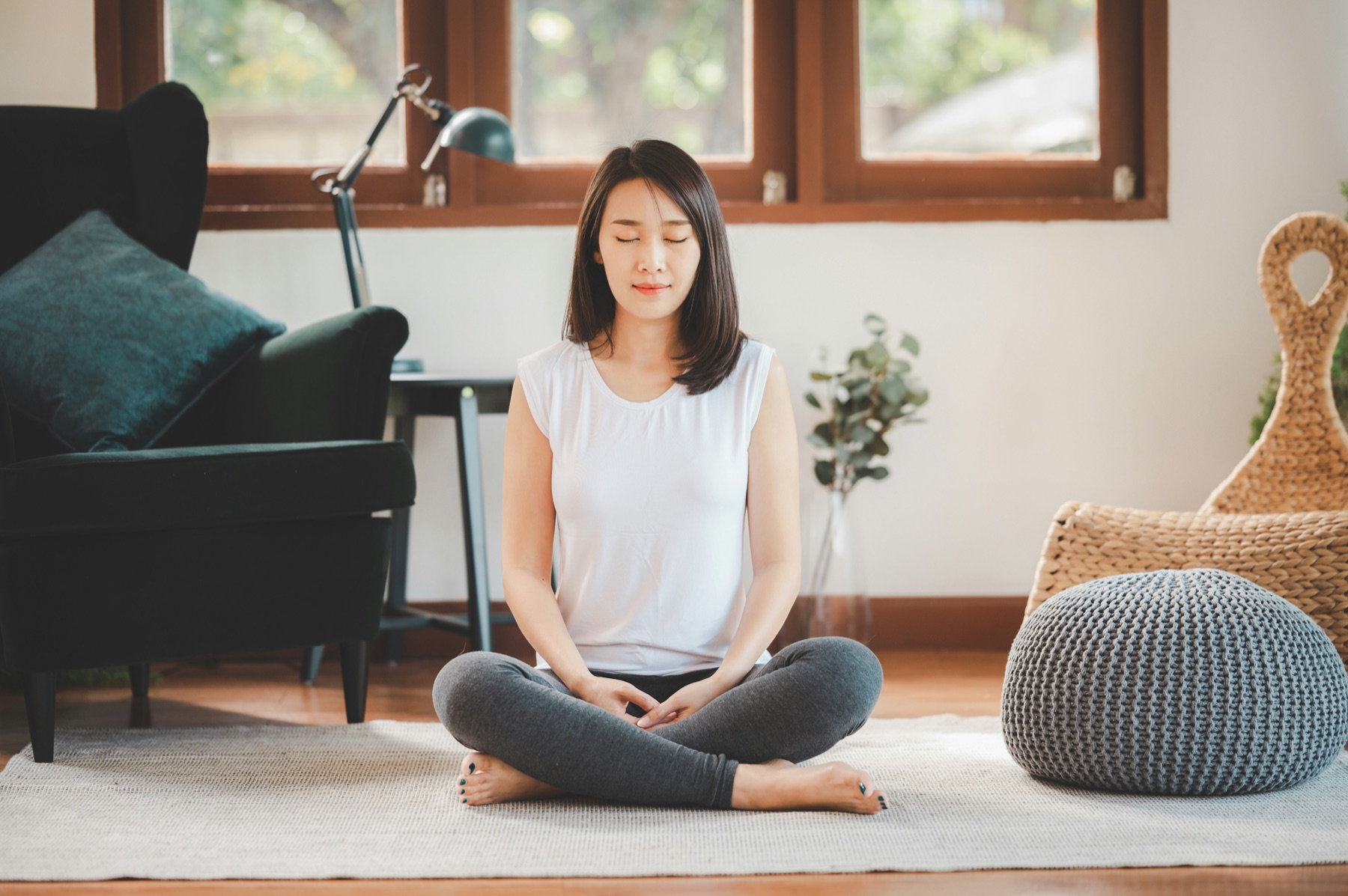
Action: Sit with your back supported and your feet resting on the floor or a stable surface. Rest your hands on your thighs, loosen your jaw, and let your shoulders drop. Keep your eyes open with a soft gaze, or close them if that feels comfortable.
Reason: A supported position reduces unnecessary effort. You want breathing to be the task, not balancing your body or holding a rigid posture. There is no need to sit perfectly straight or pull your shoulders back.
Before starting, check the following:
- Loosen clothing that presses into your chest or abdomen.
- Put your phone on silent if possible.
- Take two or three ordinary breaths without changing them.
- Notice whether you already feel breathless, dizzy, or unwell.
Warning: If you have a heart or lung condition, are pregnant, have a history of fainting, or have been advised to avoid breath holding, ask a healthcare professional whether this pattern is suitable. Choose easy breathing without pauses if holding your breath feels uncomfortable.
Follow the Box Breathing Exercise Step by Step
Allow about two minutes for your first attempt, including ordinary breathing before and afterward. Begin with three counts per phase if four feels demanding. A count can be a quiet, roughly one-second beat, but comfort matters more than exact timing.
Step 2: Breathe In Gently
Action: Inhale through your nose for your chosen count. Let your lower ribs and abdomen expand naturally, without forcing your belly outward. Stop at a comfortable breath rather than filling your lungs as much as possible.
Reason: A large, effortful inhale can make the rest of the cycle harder. Taking repeated oversized breaths can also contribute to lightheadedness. A quiet breath gives you a more manageable starting point.
- Count slowly: “One, two, three,” or “One, two, three, four.”
- Keep your shoulders relaxed.
- Reduce the count if you need to gulp air to finish.
Step 3: Pause Without Bracing
Action: After breathing in, pause for the same count. Keep your face, neck, and shoulders soft. Do not bear down, squeeze your abdomen, or try to push against a closed throat.
Reason: This pause creates the second side of the pattern. It is a brief rest in airflow, not a test of how much pressure you can tolerate. Straining adds effort when the aim is to settle.
Pro Tip: If the pause feels difficult, shorten every phase to two or three counts. If even a short pause feels unpleasant, skip the holds and use gentle, continuous breathing instead.
Step 4: Breathe Out Smoothly
Action: Exhale for the same count, using your nose or relaxed lips. Let the air leave steadily rather than blowing it out. Finish at a comfortable resting point instead of squeezing your lungs empty.
Reason: A smooth exhale helps keep the rhythm predictable. Forcefully emptying your lungs can make the next pause feel urgent. The box breathing exercise should feel controlled but not restrictive.
- Keep the exhale quiet.
- Relax your jaw and hands.
- Avoid extending the count just to match a timer.
Step 5: Pause Before the Next Inhale
Action: Pause after exhaling for your chosen count, then begin the next gentle inhale. Keep this pause especially light. If you feel a strong need for air, breathe normally rather than finishing the count.
Reason: This completes the fourth side of the pattern. The pause after exhaling can feel harder because you have less air in your lungs. It is useful feedback about your pace, not a challenge to overcome.
Warning: Never compete with the timer. Stop the pattern if you feel dizzy, tingly, nauseated, unusually breathless, or panicky, and return to ordinary breathing. Seek urgent medical help for chest pain, fainting, or severe or persistent breathing difficulty.
Step 6: Repeat a Few Comfortable Rounds
Action: Complete three to five rounds if the rhythm stays comfortable. Then breathe normally for about 30 seconds before deciding whether to continue. Stop earlier if you notice increasing effort.
Reason: Short sessions let you learn the sequence without turning it into an endurance task. You can add practice time later, but there is no requirement to progress. Finishing comfortably is more useful than reaching an arbitrary number.
Use this timing table as a reference, not a target:
| Equal count per phase | Approximate round length | Four rounds | Best use |
|---|---|---|---|
| 2 seconds | 8 seconds | 32 seconds | Learning the sequence |
| 3 seconds | 12 seconds | 48 seconds | A shorter starting rhythm |
| 4 seconds | 16 seconds | 64 seconds | The familiar four-count pattern |
These durations are simple calculations, not evidence that one pace works better. Include normal breathing before and after each set. Choose the shortest count that feels steady and unforced.
Step 7: Finish and Notice Your Response
Action: Release the counting and let your breathing find its own pace. Notice your shoulders, jaw, and level of effort. Ask yourself, “Does this feel easier, unchanged, or less comfortable?”
Reason: Your response helps you decide whether to repeat, adjust, or choose another approach. Feeling unchanged is a valid result. The aim is to learn what supports you, not to award yourself a relaxation score.
Build a Small Daily Practice
Attach the box breathing exercise to an existing transition rather than waiting until stress peaks. Try it after closing your laptop, before an important conversation, or at the start of your evening wind-down. Practicing when you feel reasonably settled makes the sequence easier to remember later.
Use this simple first-week plan:
- Days 1 and 2: Learn three rounds at a comfortable count.
- Days 3 and 4: Repeat the same amount at one predictable time.
- Days 5 through 7: Continue briefly, or add a few rounds only if it feels easy.
- After a week: Keep, modify, or drop the practice based on comfort and usefulness.
For bedtime, finish the practice without checking whether you are sleepy enough. Let it be one part of a bedtime routine, not another task to pass. If counting keeps you alert, switch to ordinary breathing or a quiet activity. If worry builds as the day slows down, our guide to evening anxiety explores possible contributors.
For people building a calmer bedtime routine, raizz connects relaxation with broader sleep support. The raizz Band works with an app and charging base, combining sleep tracking with gentle, closed-loop vibration that responds to emerging sleep disruptions. Its app also provides a sleep journal, habit tracking, and personalized guidance grounded in established behavioral sleep science. A short breathing practice can sit alongside that routine, while the wearable serves a different role during sleep. Use breathing and sleep tracking as tools, without treating either as a performance test.
Troubleshoot Common Problems
A box breathing exercise should not require pushing through discomfort. Adjust the pace first, then decide whether the pauses suit you. The NHS breathing guidance for stress also emphasizes comfortable breathing without forcing depth.
| Problem | Possible reason | What to do |
|---|---|---|
| You feel dizzy or tingly | Breaths may be too large or effortful | Stop counting and breathe normally |
| You run out of air | The count or pauses may be too long | Shorten all phases or skip pauses |
| Your shoulders rise | You may be pulling in too much air | Take a smaller, quieter breath |
| You lose count | Attention has wandered | Restart gently at the next inhale |
| You feel more anxious | Breath focus or holding may feel unsettling | Stop and focus on your surroundings |
| Nothing seems different | The effect may be subtle or absent | Avoid chasing a result; reassess later |
If you search for anxiety breathing techniques, remember that no single pattern suits everyone. Try resting your attention on your feet or naming nearby objects if breath awareness feels unsettling. Seek professional support if distress keeps recurring or interferes with daily life.
Frequently Asked Questions
How long should a box breathing exercise last?
Start with three to five comfortable rounds, followed by ordinary breathing. That may take roughly one to two minutes overall. You can try a longer session later, but duration is not a measure of success.
Must I use a four-second count?
No, shorten the count if needed. Four counts per phase is the familiar pattern described in Cleveland Clinic’s box breathing guide, but it should not require strain. Keep the phases equal only while that remains comfortable.
Can I practice before bed?
Yes, if the pattern feels relaxing rather than effortful. Use a short session during your wind-down and then let go of the counting. Do not stay awake trying to make it produce sleep.
Should I breathe through my nose or mouth?
Try a gentle nasal inhale if your nose is clear. Exhale through your nose or relaxed lips, whichever feels easier. Do not force nasal breathing through significant congestion.
What if I cannot hold my breath comfortably?
Skip the holds and breathe gently in and out. That is no longer the full four-phase pattern, but comfort matters more than following its shape. Ask a healthcare professional for guidance if breathing itself is difficult.
Can I use it during a stressful moment?
Try it only when you can safely pause. If holding your breath adds tension, choose continuous, unforced breathing instead. Practice in calmer moments first so the sequence feels familiar.
Make Your Next Pause a Gentle One
Start your next box breathing exercise with a supported seat, a short count, and permission to stop. Give yourself a few comfortable rounds, then return to normal breathing and your day. Your next pause does not have to change everything to be worth taking.
raizz
Your Tomorrow Starts Tonight.
raizz helps connect a calmer bedtime routine with personalized sleep support.


