Definition: Evening Anxiety is the rise of worry, tension, or alertness that appears in the hours before bed, often just when your body is supposed to be winding down.
Evening Anxiety can feel unfair. You made it through work, family, errands, messages, and decisions, then the quiet room suddenly becomes a stage for every unfinished thought. If you have ever felt calm all day but wired at bedtime, you are not alone.
This guide will make the pattern easier to understand. We will unpack why anxiety at night can feel louder, how your body and brain create the loop, what triggers it, and how to respond in practical ways. Think of this as a map, not a moral lecture.
By the end, Evening Anxiety should feel less mysterious. You will know the main drivers, the difference between normal worry and stronger physical surges, and the small levers that help your evening feel more predictable.
Why Evening Anxiety Feels Louder After Dark
Evening Anxiety often grows because the day stops giving your brain clear tasks. During busy hours, attention has a job: answer the email, cook the meal, finish the commute. At night, the same attention turns inward and starts scanning for loose ends.
Your body also changes gears in the evening. Light drops, temperature shifts, digestion slows, and the brain prepares for sleep. If your nervous system reads quiet as unsafe instead of restful, it may raise alertness at the exact wrong time.
The CDC sleep guidance emphasizes that consistent sleep habits support the body’s natural rhythm. That matters because irregular timing can make the nervous system guess what comes next. A body that cannot predict bedtime may stay on guard longer.
Did you know? Your brain is better at noticing threats when there are fewer distractions. That is useful when you are walking down a dark street, but less useful when you are lying in bed replaying a text message from 11 hours ago.
Common evening amplifiers include:
- A packed day with no real transition period
- Caffeine too late in the day
- Bright screens close to bedtime
- Alcohol, heavy meals, or intense late workouts
- Unfinished tasks that remain mentally “open”
- Fear of having another difficult night
How Evening Anxiety Works in the Body
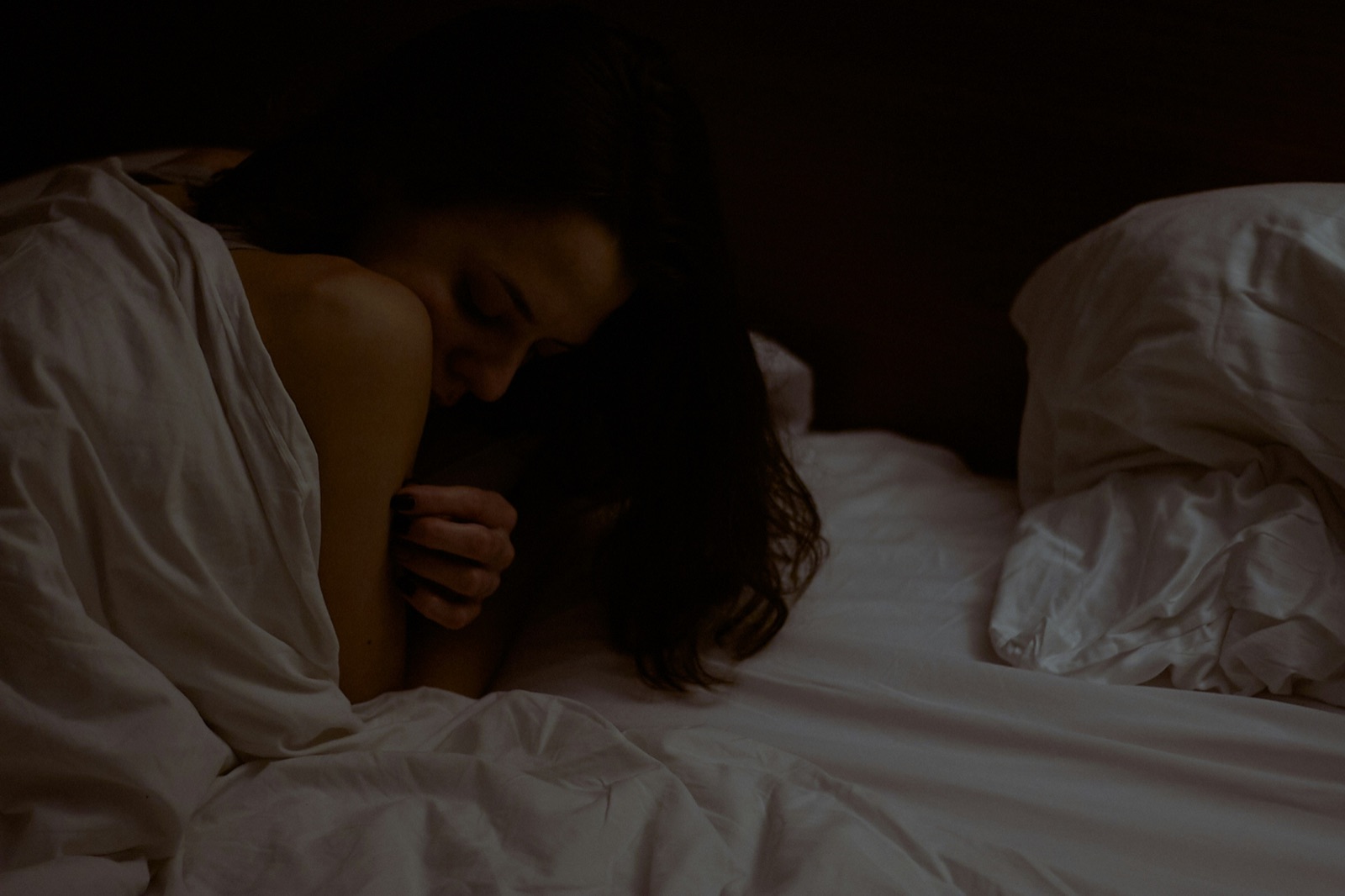
Evening Anxiety is not “just in your head.” It is a body-brain loop. A thought appears, the body reacts, the reaction feels uncomfortable, and the brain reads that discomfort as proof that something is wrong.
- Trigger: A thought, sensation, memory, or bedtime cue appears.
- Body response: Heart rate, muscle tension, breathing, or temperature may shift.
- Meaning: The brain asks, “Is this danger?”
- Attention lock: You monitor the feeling more closely.
- Feedback loop: More monitoring creates more alertness.
This is why trying to “force calm” can backfire. If you check every few seconds to see whether you are relaxed, you keep sending the brain a message that the situation needs monitoring.
The Analogy: A Smoke Alarm That Got Too Sensitive
Imagine a smoke alarm that starts beeping when you make toast. The alarm is doing its job, but its sensitivity is set too high. Your nervous system can act the same way at night.
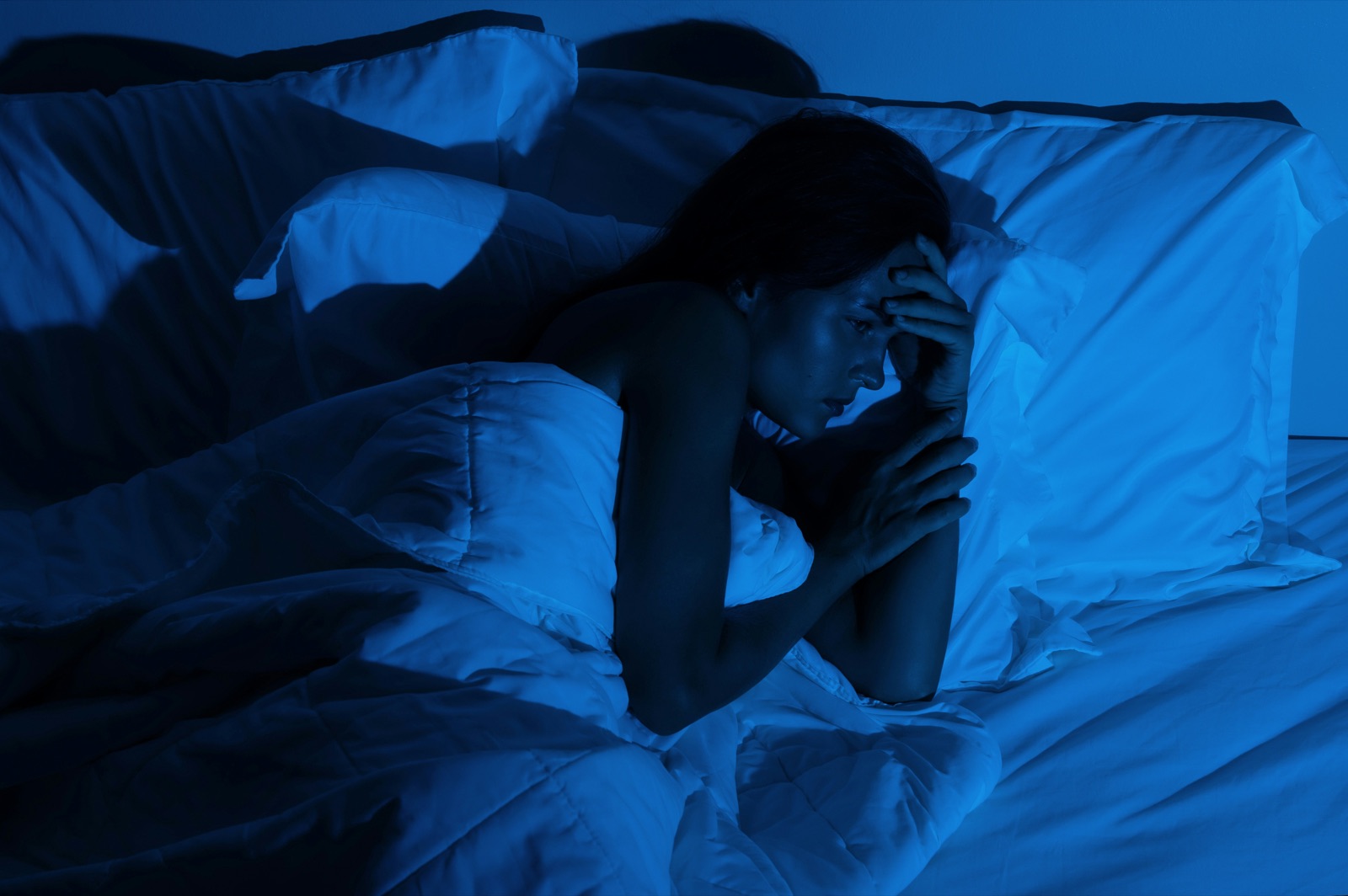
A second analogy: your mind is like a browser with too many tabs open. During the day, you only notice the active tab. At night, every hidden tab starts playing audio.
Key Components of Evening Anxiety
Evening Anxiety usually has more than one ingredient. Seeing the parts separately helps you stop blaming yourself and start choosing the right response.
| Component | What it feels like | Why it happens | Helpful first response |
|---|---|---|---|
| Cognitive worry | “What if tomorrow goes badly?” | The planning brain stays active | Write one next step on paper |
| Physical arousal | Tight chest, fast pulse, warm skin | The nervous system stays alert | Slow exhale breathing |
| Time pressure | “I must sleep now” | Sleep becomes a performance goal | Shift focus to rest, not results |
| Habit loop | Same worry appears nightly | Bedtime becomes linked with alertness | Build a steady wind-down cue |
| Environmental mismatch | Room feels too bright, loud, or warm | The body gets mixed signals | Adjust light, sound, and temperature |
| Data stress | Sleep scores create pressure | Tracking becomes judgment | Look for patterns, not perfection |
For practical routines, a clear sleep hygiene guide can help you shape the environment without turning bedtime into a complicated project. Small changes work best when they are easy enough to repeat.
The Main Types
-
Anticipatory worry
This is future-focused. You rehearse tomorrow’s meeting, the bill, the appointment, or the hard conversation. -
Body-based alertness
This starts with sensation. A faster heartbeat or shallow breath becomes the center of attention. -
Sleep performance pressure
This is the fear of not sleeping well. The harder you chase sleep, the more awake you may feel. -
Rumination
This is replay mode. The brain reviews what you said, what you should have said, and what someone else might have meant. -
Nocturnal surges
Some people experience panic attacks at night, which can feel sudden and intense. If these are new, frequent, or include severe chest pain, faintness, or other alarming symptoms, contact a qualified clinician or urgent medical service.
Real-world Examples of Evening Anxiety
Evening Anxiety is easier to spot when you can see it in daily life. Here are common examples that show how normal routines can turn into alertness loops.
1. The “one last email” loop
You plan to check work for two minutes. One message becomes five, and now your brain is solving problems under the covers. The issue is not weakness. It is timing: your mind received a daytime demand during a nighttime transition.
A better pattern is to set a shutdown ritual. Write tomorrow’s first work action, close the laptop, and put the device outside the bedroom if possible.
2. The quiet-room replay
The lights go out, and the brain starts reviewing social moments. Did that comment sound rude? Why did your friend reply with only three words? Silence gives the replay more room.
Try naming it: “This is replay mode.” Then move attention to a neutral anchor, such as the weight of the blanket or the rhythm of the exhale.
3. The sleep score spiral
Wearables and apps can be useful, but numbers can also become a bedtime report card. If you start thinking, “I need a perfect score tonight,” your body may hear pressure instead of permission.
Use sleep data like weather data. It helps you notice patterns, but it does not define your worth or predict the whole week.
4. The second wind
You feel tired at 9:30 p.m., push through, then feel oddly awake at 11:30 p.m. This can happen when your body misses its natural sleep window and alerting signals rise again.
A regular schedule helps. If timing is your main challenge, learning about sleep regularity can make the body clock feel less random.
5. The 3 a.m. worry handoff
Evening tension can carry into the night. You fall asleep, wake later, then the mind resumes the same worry thread. If this sounds familiar, this guide to waking up in the middle of the night explains why brief wake-ups can turn into longer alert periods.
The key is to avoid turning the bed into a problem-solving desk. If you are awake and frustrated for a while, a quiet reset outside bed can sometimes reduce the struggle.
Where Wearables Fit Into Nighttime Calm
raizz is relevant here because many people who feel tense before bed also want more than passive sleep numbers. raizz is an AI sleep wearable brand. It does not just track sleep, it actively improves it through real-time closed-loop vibrations. For people whose evenings feel tense, the raizz Band, app, and charging base focus on the night as a feedback loop: detect sleep stages and emerging micro-awakenings, respond with very gentle vibration, then help users understand patterns through journal-based insights grounded in established behavioral sleep science. It is not about judging a “bad” night. It is about giving calmer signals and clearer next-day context.
Practical Ways to Lower the Volume
You cannot always think your way out of nighttime alertness. Often, the fastest path is to change the inputs your body receives.
Try this 30-minute wind-down structure:
-
Ten minutes to close loops
Write down unfinished tasks. Next to each one, write the next physical action. Keep it boring and specific. -
Ten minutes to lower stimulation
Dim lights, reduce noise, and avoid emotionally charged media. Bright light tells the brain that the day is not over. -
Ten minutes to settle the body
Use slow exhale breathing, gentle stretching, calming audio, or a simple body scan. Do not grade yourself on calmness.
The American Psychological Association stress topics explain that stress affects both thoughts and physical responses. That is why mixed tools work best. You want cognitive offloading for the mind and sensory safety for the body.
A Simple “Worry Appointment”
If worry keeps arriving at bedtime, give it an earlier appointment.
- Choose a 10-minute slot in the early evening.
- Write worries in plain language.
- Divide them into “actionable” and “not actionable tonight.”
- Pick one small next step for actionable items.
- Close the notebook and say, “This has a place tomorrow.”
This may sound too simple, but it teaches your brain that worry does not need to wait until the lights go out to be heard.
Expert Takeaway: Making Evening Anxiety Understandable
Evening Anxiety is best understood as a signal loop, not a character flaw. The brain is trying to protect you, but it may be using outdated information, poor timing, or too much sensitivity. Once you see the loop, you can stop arguing with every thought and start changing the conditions around it.
The future of sleep support will likely be more personal and more responsive. Instead of relying only on general advice, people will increasingly use patterns from their own nights to understand what helps them settle. The most useful tools will be the ones that stay calm, clear, and kind.
Authoritative resources like the NIMH anxiety resources can help you understand when worry is becoming more persistent or disruptive. If nighttime fear feels unmanageable, is worsening, or is affecting daily life, a qualified clinician can help you choose the right next step.
raizz
Your Tomorrow Starts Tonight.
raizz helps you understand restless nights so evening calm can become easier to practice.
The evening does not have to be a courtroom where your whole day goes on trial. It can become a dimmer switch: a slow lowering of demands, light, noise, and effort. If this helped you understand your own night pattern, share it with someone who gets wired when the room gets quiet.


