Your Sleep Score Isn't the Whole Story: How to Read Your Sleep Data Without the Anxiety
 10 min read ·

You wake up, reach for your phone, and check one number before you have even sat up. If it is high, the day feels a little brighter. If it is low, a small worry settles in before your feet touch the floor.
That single number is your sleep score. It is useful, but it was never meant to carry this much weight.
Sleep, improved in real time
Get early access to better, more stable sleep.
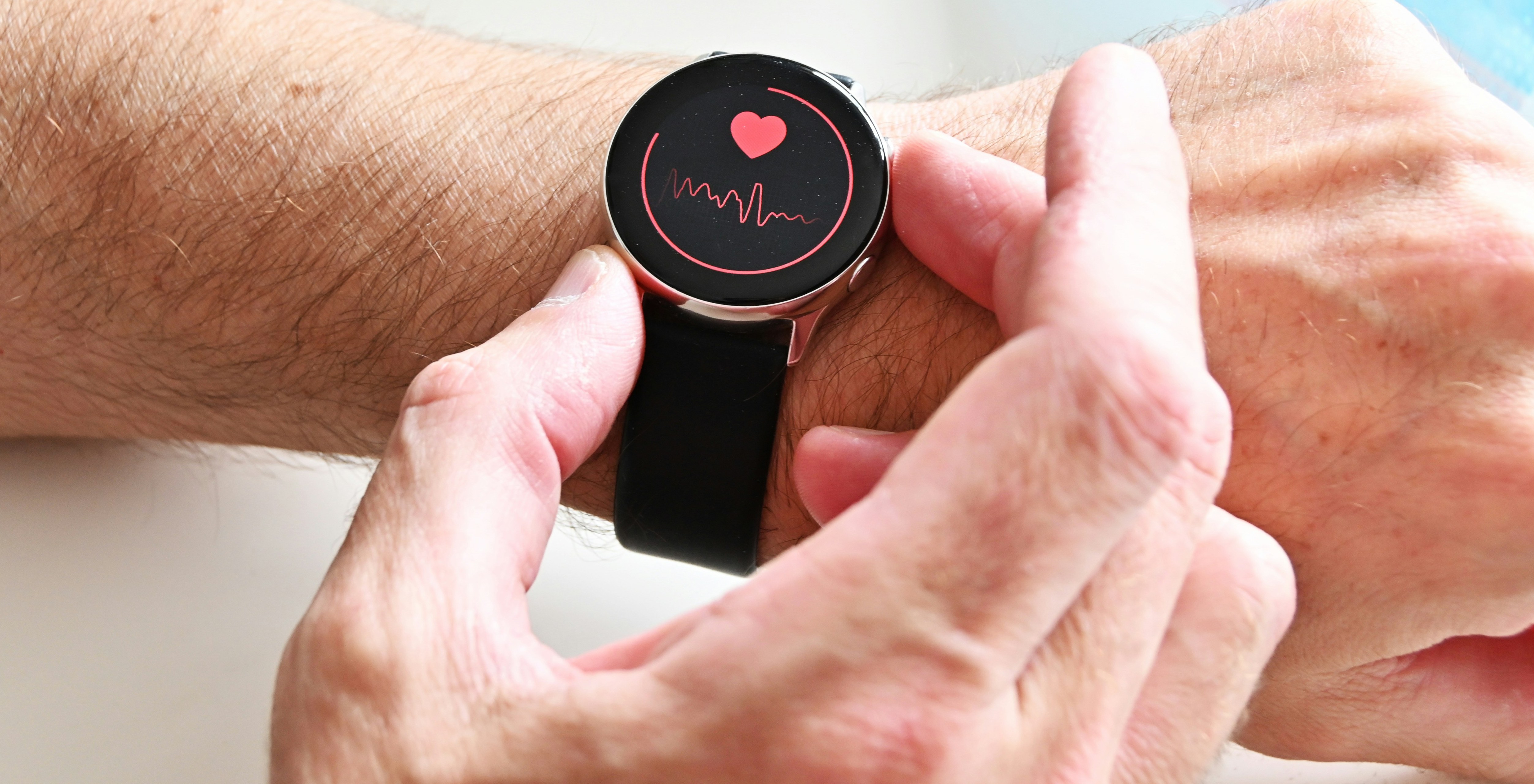
Nearly half of U.S. adults now track their sleep. In a 2026 survey from the American Academy of Sleep Medicine, 48 percent said they had used a smartwatch, ring, or app to monitor their sleep, up from 35 percent in 2023. For most people, the app opens to one headline figure: the sleep score.
A single number is easy to read, and just as easy to worry about. In a July 2026 report in the San Francisco Chronicle, sleep specialists warned that the people who track most obsessively, chasing an optimal score, may be the least likely to benefit from tracking at all. This guide is about reading your sleep data without letting it read you.
1. Why a sleep score can quietly make you anxious
A sleep score feels objective, so a low number can spoil a morning before it starts. Clinicians even have a name for the anxious fixation on sleep data: orthosomnia. The worry it creates is the very thing that keeps you awake.
Sleep specialists describe patients who feel fine during the day but arrive stressed because a wearable gave them a score of 50 or 60. The device says one thing, the body says another, and the number wins. That is orthosomnia in action: an unhealthy focus on sleep metrics that can raise anxiety and make rest harder to reach.
We have written about this before. Too much focus on sleep metrics can raise anxiety and make rest harder to reach, which is one of the quiet risks we flagged in our guide to what actually works in sleepmaxxing. The point is not to ignore your data. It is to hold it loosely, as a gentle signal rather than a verdict.
2. What sleep trackers are genuinely good at, and what they are not
Trackers are good at the big picture: whether you are asleep or awake, and roughly how long you slept. They are shakier on the fine detail, especially at telling deep sleep apart from light sleep.
By reading your heart rate and movement, wearables are fairly accurate at distinguishing sleep from wakefulness, and so at estimating your total sleep time. They are also reasonably good at spotting REM sleep, because that stage brings more heart rate variability for sensors to pick up on.
Where they struggle is deep versus light sleep. The benchmark for confirming your sleep stages is polysomnography, an overnight lab study that records brain activity with an EEG, and consumer wrist wearables are validated against it. In practice they are far better at estimating your overall sleep than at pinning down which stage you were in. So when your app shows a precise breakdown of your stages, treat it as a thoughtful estimate, not a lab report. This is part of the wider gap between watching your sleep and changing it, which we cover in sleep trackers vs. active sleep improvement.
3. Look at your sleep stages, not just total hours
A healthy night is not simply enough hours. It is a healthy distribution across the sleep stages. Light sleep in particular is not wasted time. It can make up around half of your night, and your brain depends on it.
Many people see a lot of light sleep on their tracker and assume they had a bad night. That reading is backwards. In a typical adult night, light sleep (stage N2) accounts for roughly 45 to 55 percent of the total, with deep sleep and REM each taking a smaller share. Spending a large part of the night in light sleep is exactly what a healthy brain is supposed to do.
Each stage does different work. Light and deep sleep support memory and physical repair and help clear proteins linked to Alzheimer's, while REM supports emotional processing, and some functions unfold across several stages together. A healthy brain moves through all of them in a good night's sleep.
So the more useful question is not "how many hours did I get," but "did my night have a healthy shape." A balanced distribution of stages tells you more than total sleep time ever will.
4. Your sleep score is a black box
Every brand builds its score with its own hidden algorithm. There is no shared standard, so your 82 and a friend's 82 on a different device do not mean the same thing. Use the score as a reference, never as the final word.
A sleep score is not standardized the way, say, a pulse oximeter reading is standardized across brands. Each company runs its own black-box formula, so scores are not comparable from one device to the next, and a score on its own is not an objective measure of how well you slept.
What a score can do well is track change over time on the same device, a bit like a bathroom scale. The absolute number matters less than the trend against your own past nights. If your scores have been steady and then drop, that is a useful prompt to ask what changed: a new mattress, a new medication, a late glass of wine, a stressful week.
In other words, the score is absolutely worth keeping as a reference point. It just should not be the only standard you judge your sleep by.
5. How you feel is data too, and the sleep journal that captures it
The most important signal is not on the screen. It is how rested you feel. Pairing the number with a short daily note turns vague data into something you can actually act on.
Your subjective sense of your own sleep is a genuinely valuable second axis, separate from any score. Feeling clear and energized after a "70" night is real information. So is feeling foggy after a "90." Neither cancels the other out. Together they tell a fuller story than either alone.
This is where a sleep journal earns its place. In the Raizz app, you can jot down what you did the night before, and even during the day: your caffeine, your workout, your screen time, your stress, that late dinner. Over a couple of weeks, patterns surface. You start to see which inputs actually move your sleep, in your body, not in a general study.
Two things make this work. First, habits need time. A change to your routine usually takes a couple of weeks to show its effect, so give it room before you judge it. Second, the journal captures what you feel, which the score cannot. Notice that a night after alcohol leaves you more fragmented, and you have learned something a number could only hint at.
6. Where Raizz fits: sleep as a system, not a scoreboard
All of this reflects how we see sleep in the first place. We treat sleep as a system, a set of connected inputs and stages that shape each other, rather than a single score to chase. That idea sits at the center of everything we build, and we unpack it fully in sleep is a system.
Raizz treats sleep as a system. But we do not treat sleep as a score to perfect. We treat it as a system to support, night after night. Rather than watching your sleep and handing you a grade in the morning, Raizz uses gentle vibrational input, a soft, rhythmic signal that works with your body to ease it toward rest and help it stay settled through the night. It is active rather than passive, an adaptive kind of sleep support that responds in the moment rather than simply recording it.
In that picture, the sleep score is just one input. Your stage distribution, your habits over time, and your own felt sense of rest are the rest of it. Raizz is designed to complement healthy sleep habits and clinical care, not to replace them, and never to become one more number to worry about.
The bottom line
Your sleep score is a starting point, not a scoreboard. It is genuinely useful as a personal trend line, and much less useful as a grade to obsess over.
Hold onto three things. First, read the shape of your night, not just the hours, and remember that light sleep is supposed to be there. Second, treat the score as a reference against your own past, not a standard set by a black box. Third, listen to how you feel, and let a simple sleep journal connect the number to your real life.
Read the whole story, hold the number loosely, and let your data point you toward calm rather than away from it. That is what Raizz is for.
Frequently Asked Questions
Not necessarily, but notice how it makes you feel. An anxious fixation on sleep data, which clinicians call orthosomnia, can raise stress and make sleep worse. If checking the number every morning increases your worry, look at weekly trends instead of nightly scores, and give more weight to how rested you actually feel.
Three things. First, the spread of your sleep stages rather than total hours alone, remembering that light sleep is normal and important. Second, your daily habits tracked over time, since a habit needs a couple of weeks to show its effect. Third, your own subjective sense of how rested you feel. A short sleep journal ties all three together so you can find what genuinely helps your sleep.
More Articles You Might Like






Have questions, want to join us, or simply want to connect? We'd love to hear from you. Feel free to reach out at
[email protected]