From Tracking to Training: The Emergence of Adaptive Sleep Systems
 4 min read ·

Over the past decade, sleep technology has largely focused on measurement. We can now estimate sleep stages, quantify heart rate variability, and observe nightly recovery trends. But measurement alone does not necessarily translate into meaningful improvement.
As sleep science and technology evolve, the next frontier may not be deeper analysis — but adaptive support to meaningfully improve sleep.
Go Beyond Tracking
Be among the first to experience sleep that actively improves itself
What Does Meaningful Sleep Improvement Look Like?
In behavioral sleep research, improvement is defined by measurable endpoints:
· Faster sleep onset (reduced sleep latency)
· Reduced WASO (Wake After Sleep Onset)
· Higher sleep efficiency
· Increased consolidated total sleep time
· More consistent sleep timing
To understand more about these sleep concepts, please refer to our
previous blog :
The Science of Sleep: Core
Sleep Health Metrics Guide
These endpoints are objective, measurable, and supported by decades of research and any future sleep system should ultimately be evaluated against these standards.

The Current Tracking Paradigm
Most consumer sleep devices operate through retrospective reconstruction:
1. Peripheral signals are recorded (movement, heart rate).
2. Machine learning models estimate sleep stages probabilistically.
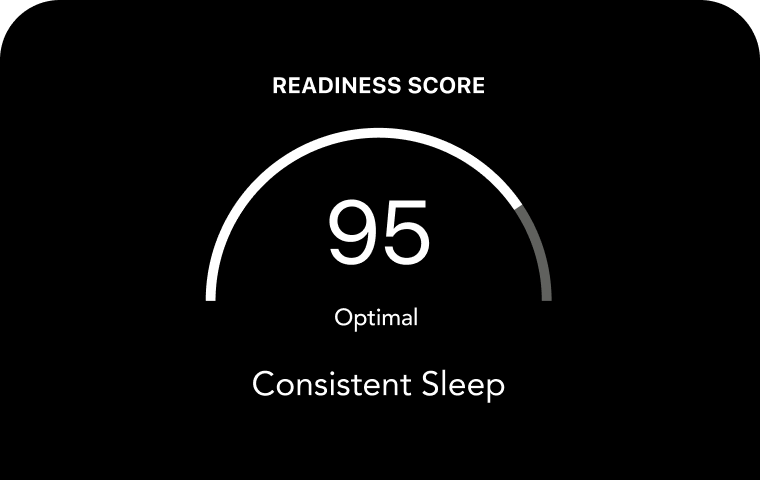
3. A summary score is delivered in the morning.
This approach quantifies sleep and primarily answers: What happened last night? It does not directly change sleep. A morning sleep score cannot retroactively improve sleep efficiency, increase total sleep time, reduce WASO, or shorten latency. It may increase awareness, and awareness can influence behavior. But behavior change requires structured intervention.

Toward Adaptive Sleep Training
A potential evolution in sleep systems is the development of adaptive, responsive technologies. Rather than attempting to alter neural architecture, adaptive systems aim to detect signs of restlessness or instability, as inferred from signals such as movement or heart rate patterns, respond in subtle, non-disruptive ways, and support the continuity and efficiency of sleep.
The emphasis is not on controlling sleep stages. Instead, the focus shifts to actively supporting the clinical endpoints established above—smoothing the transition into sleep, reducing nighttime awakenings, stabilizing sleep periods, and achieving high efficiency.
A Practical Framework for Future Sleep Systems

We can conceptualize the evolution of sleep technology in three stages:
Stage 1: Quantification
Tracking sleep duration and trends.
Stage 2: Personalization
Identifying personalized patterns and behavioral adjustments.
Stage 3: Adaptive Support
Responsive systems that aim to reduce latency and fragmentation while promoting consolidated sleep.
The third stage does not imply direct modification of neural oscillations. Instead, it focuses on supporting natural sleep processes through subtle, context-aware responsiveness.
Conclusion
We believe the future of sleep technology will lie in systems that responsibly and measurably improve the core pillars of sleep health: reducing sleep latency, minimizing fragmentation, achieving sufficient and consolidated total sleep time, and maintaining stable sleep timing. Grounding innovation in validated sleep fundamentals ensures that progress remains both scientifically rigorous and regulatorily appropriate. Adaptive sleep support — aligned with measurable outcomes — may define the next phase of sleep systems.
Frequently Asked Questions
Sleep tracking operates through retrospective reconstruction: peripheral signals are recorded, machine learning models estimate sleep stages, and a summary score is delivered in the morning. Adaptive sleep support aims to detect signs of restlessness or instability in real time, respond in subtle and non-disruptive ways, and support the continuity and efficiency of sleep as it happens.
In behavioral sleep research, meaningful sleep improvement is defined by measurable endpoints: faster sleep onset (reduced sleep latency), reduced WASO (Wake After Sleep Onset), higher sleep efficiency, increased consolidated total sleep time, and more consistent sleep timing. Any future sleep system should be evaluated against these standards.
A morning sleep score cannot retroactively improve sleep efficiency, increase total sleep time, reduce WASO, or shorten latency. It may increase awareness, and awareness can influence behavior. But behavior change requires structured intervention. Scoring alone does not directly change sleep.
More Blogs You Might Like
Sleep, improved in real time
Get early access to better, more stable sleep.

© 2026 AxiLab. All rights reserved